Okay, if you’ve never had a hoe cake, grab a seat, because you’re in for a treat. These little cornmeal cakes are one of those old-school Southern staples that just refuses to go out of style — and once you bite into that crunchy edge and hit the soft, buttery middle, you’ll get why grandmothers all over the South have been making these for generations without a single complaint. Whether you call them hoe cakes, johnnycakes, or fried cornbread (we won’t judge), this easy recipe turns a handful of stuff already in your pantry into something pretty magical.
What Exactly Are Hoe Cakes, Anyway?
Let’s clear up the mystery first, because the name throws people every time. A hoe cake is just a simple cornmeal batter, fried in a skillet until the outside gets crispy and golden while the inside stays soft and a little sweet. Legend has it the name comes from field workers who supposedly cooked their cornbread right on the flat blade of a garden hoe over an open fire — hence “hoe cakes.” Is that actually true, or just a good story that’s been passed down at every family cookout? Who knows. Either way, it makes for great conversation while you’re standing at the stove flipping cakes.
They’re kind of cousins with cornbread, but don’t lump them together — they’re their own thing entirely. Cornbread bakes up soft and cakey in the oven; these get pan-fried, which is exactly what gives them that crust everyone fights over. Think of them as cornbread’s crispier, more portable, snack-on-the-go little sibling. And since there’s no oven involved, you can have a hot batch on the table way faster.
Why This Old Fashioned Recipe Works
There’s a reason this one’s stuck around for so long: it’s incredibly simple , and it uses stuff you probably already have sitting in your kitchen right now. No fancy gadgets, no eighteen-step technique — just a mixing bowl, a good skillet, and a little patience while they fry.
It’s also about as flexible as recipes get. Go sweet with syrup and butter for breakfast, or go savory next to a bowl of pinto beans and greens for supper. Southern cooks have been bending this dish to whatever’s on hand for centuries, so don’t feel bad putting your own spin on it too.
Ingredients You’ll Need
Prep Time: 10 minutes
Cook Time: 15 minutes
Total Time: 25 minutes
Servings: 8 hoe cakes
• 1 cup yellow cornmeal
• 1/2 cup all-purpose flour
• 1 tablespoon sugar (optional, for a slightly sweet cake)
• 1 teaspoon baking powder
• 1/2 teaspoon salt
• 1 cup buttermilk (regular milk works in a pinch)
• 1 large egg
• 2 tablespoons melted butter, plus more for frying
• Vegetable oil or bacon grease, for the skillet
That’s the whole list. No hunting down some obscure ingredient at three different stores. Just cornmeal, a few basics, and a hot skillet doing the heavy lifting.
How to Make Them
Step 1: Mix the Dry Ingredients
In a large mixing bowl, whisk together the cornmeal, flour, sugar (if you’re using it), baking powder, and salt. Get it evenly mixed so nobody ends up with a mouthful of straight baking powder — that’s not the flavor you’re looking for
Step 2: Add the Wet Ingredients
In a separate bowl, whisk together the buttermilk, egg, and melted butter. Pour that into your dry ingredients and stir just until it comes together. Don’t overmix — a few lumps are totally fine, and going too hard on the batter just makes things tough instead of tender.
Step 3: Let the Batter Rest
Let it sit for about five minutes. This gives the cornmeal a chance to soak up some of that buttermilk, which helps everything hold together once it hits the hot skillet instead of falling apart on you.
Step 4: Heat Your Skillet
Cast iron is the MVP here — it holds heat evenly and gets you that deep golden color everyone’s after. Heat a couple tablespoons of oil or bacon grease over medium heat until it’s shimmering.
Step 5: Fry the Cakes
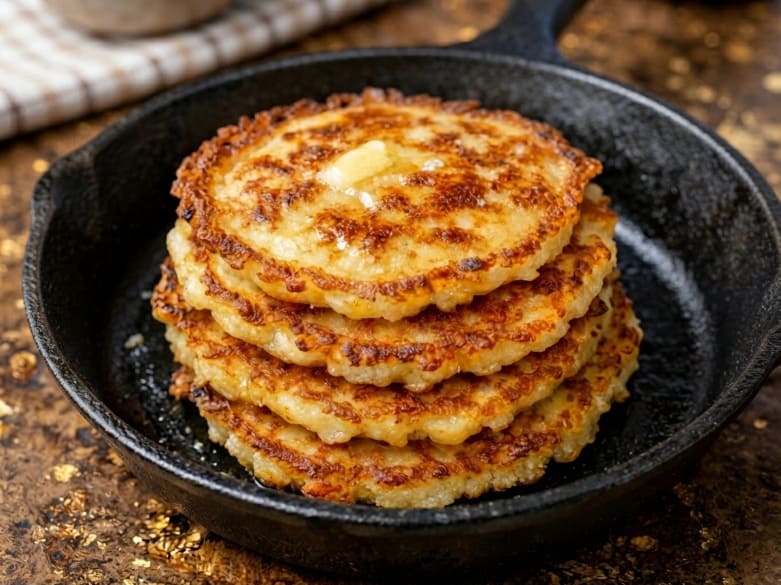
Scoop about 2-3 tablespoons of batter per cake into the hot skillet, flattening it slightly with the back of your spoon. Fry for 2-3 minutes per side, until each one’s deeply browned and crisp around the edges. Don’t crowd the pan — give each cake some elbow room so it actually fries instead of just steaming itself into mush.
Step 6: Drain and Serve
Move the finished cakes to a plate lined with paper towels to catch any extra grease, then dig in while they’re still hot. This is not a dish that improves with waiting.
Tips for Getting That Perfect Crust
A few little tricks separate a decent batch from one people will talk about later:
• Don’t skimp on the fat. The oil or bacon grease is doing the real work here, so don’t try to lighten things up.
• Keep the heat at medium. Too hot and the outside burns before the inside’s done; too low and you get pale, greasy cakes nobody’s excited about.
• Use cast iron if you’ve got it. It just holds heat more evenly than nonstick, and that’s the secret to good color all the way around.
• Don’t flatten them too thin. You want them thick enough that the middle stays soft and a little custardy while the outside crisps up.
• Fry in batches. Wipe out the skillet and add fresh grease between rounds if it starts looking dark or burnt, so every batch tastes as clean as the first.
Serving Suggestions
Honestly, the best part of this dish is how far it stretches. For breakfast, stack a few and hit them with butter, honey, or maple syrup — they’re basically cornbread pancakes, and that’s a genuinely great way to start a morning. Want something more savory? Serve them next to fried chicken, collard greens, or a big pot of beans. They also make a surprisingly great stand-in for a bun under pulled pork or shredded barbecue, if you’re looking to switch things up.
Got leftovers? Lucky you. Reheat them in a skillet or toaster oven for a couple minutes a side and that crunch comes right back like nothing happened.
Variations to Try
Once you’ve got the basic recipe down, this is where you get to have some fun:
• Cheesy version: Fold in a handful of shredded cheddar for a savory twist.
• Jalapeño version: Add diced jalapeños if you like a little heat.
• Sweet corn version: Stir in a cup of fresh or frozen corn kernels for extra texture and sweetness.
• Herb-flecked cakes: Chopped chives or green onions add a nice fresh bite.
This has always been a “use whatever’s in the fridge” kind of dish, so don’t overthink it — make it your own.
Frequently Asked Questions
Are hoe cakes the same as johnnycakes? Pretty close cousins. Both are pan-fried cornmeal cakes, though johnnycakes traditionally come from New England and sometimes use a slightly different cornmeal-to-liquid ratio. Down South, folks usually use the terms interchangeably anyway.
Can I make these without buttermilk? Yep, regular milk works fine. Buttermilk just adds a slight tang and helps the baking powder do its job for a lighter texture.
Why are mine falling apart? Usually that means the batter needed a bit more resting time, or the skillet wasn’t hot enough when the batter hit it. Give it a few extra minutes to rest and make sure that oil’s properly hot, and you should be good.
Can I make a gluten-free version? Sure can — swap the all-purpose flour for a gluten-free blend, or just use cornmeal alone with a little extra egg to help hold everything together.
Final Thoughts
Fresh from the skillet, these golden hoe cakes deliver the perfect contrast of a crispy crust and a tender center — a simple Southern favorite that comes together in just about thirty minutes.
This old fashioned recipe has stuck around for a reason, and now that you know the method, don’t be surprised if it becomes a regular thing in your kitchen too. Sweet for breakfast or savory alongside supper, homemade hoe cakes are living proof that some of the best Southern cooking comes from the simplest stuff you already have on hand.