Introduction
Some recipes just stick around. Not because they’re complicated or impressive — actually kind of the opposite. Brown sugar pork chops are the kind of thing you make once, slightly by accident, and then find yourself coming back to every few weeks without really planning to.
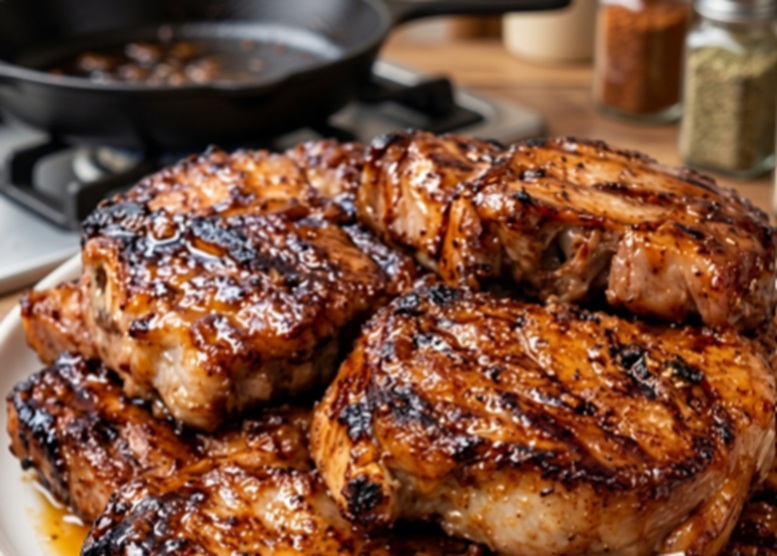
The sweet-savory thing they’ve got going on is hard to explain without sounding like a food magazine. It’s just… good. The sugar caramelizes, the pork gets this sticky glaze that clings to the edges, and the whole thing smells like something your kitchen should smell like more often.
I’ll admit I was skeptical the first time. Brown sugar on meat felt like a dessert-adjacent decision. It isn’t. It’s actually one of the more reliable flavor moves in a simple weeknight cook’s arsenal.
Ingredients
What Goes Into This — Pretty Short List, Honestly
4 bone-in pork chops, about 2cm thick
3 tablespoons brown sugar, packed
1 teaspoon garlic powder
1 teaspoon smoked paprika
½ teaspoon onion powder
½ teaspoon black pepper
½ teaspoon salt (or a bit more, depending on preference)
¼ teaspoon cayenne — optional, but it earns its place
2 tablespoons olive oil or butter
Fresh thyme or rosemary if you have it around
Bone-in chops hold up better here. Boneless work, but they tend to dry out faster and the texture suffers a little. In my experience, the bone genuinely helps regulate how the meat cooks through.
Instructions
Where People Usually Go Wrong (And How Not To)
Pull the chops out of the fridge about 20 minutes before cooking. Room temperature meat cooks more evenly — this tends to matter more than people think, especially with pork.
Mix your brown sugar, paprika, garlic powder, onion powder, salt, pepper, and cayenne in a small bowl. Pat the chops completely dry with paper towels. Press the rub onto both sides firmly — don’t just dust it on. You want it to actually adhere.
Heat your pan over medium-high. Cast iron is ideal here because you want solid, even heat retention. Add your oil or butter and let it get properly hot. Not smoking, but shimmering.
Lay the chops in carefully. Don’t crowd them — if they’re touching, you’re steaming, not searing. Leave them alone for 3 to 4 minutes. Resist the urge to peek or move them. The sugar is caramelizing and it needs contact time to do its thing properly.
Flip once. Another 3 to 4 minutes depending on thickness. The outside should be deeply golden with some darker edges where the sugar caught the heat. That’s not burning — that’s flavor, mostly.
Internal temperature should hit 63°C (145°F). Pull them off and rest for 5 minutes. Resting isn’t optional; it’s the step that keeps them juicy instead of dry.
Hints for Success
Little Things That Actually Change the Result
Dry the chops before applying the rub. Moisture works against the caramelization and you’ll end up with something closer to a steam situation than a proper sear.
Don’t use high heat. Medium-high is the ceiling here. The sugar burns faster than you’d expect, and burnt sugar smells great for about three seconds and then becomes deeply unpleasant.
Resting the meat after cooking is one of those things that sounds fussy but genuinely matters. Five minutes under a loose piece of foil makes a noticeable difference to how the juices redistribute.
If the glaze is getting too dark before the meat is cooked through, reduce the heat and add a small splash of water to the pan. It buys you time without ruining anything.
Leftovers, if there are any, are excellent cold. Slightly odd to say, but true.
Health Benefits
Better Than the Sugar Name Suggests
Pork chops are a solid protein source — often underestimated compared to chicken, but nutritionally in the same conversation. A single serving delivers somewhere around 25 to 30 grams of protein depending on size and cut.
They’re a reasonable source of B vitamins, particularly B1 (thiamine) and B6. Also zinc and selenium, which tend to get overlooked but matter for immune function and general metabolic stuff. The nutritional case for pork is stronger than its reputation in some circles.
The brown sugar adds minimal calories in the context of the full dish. It’s primarily there for flavor and the Maillard reaction — the actual caramelization that makes the surface so appealing. It’s not a sugar-heavy recipe by any reasonable measure.
But that’s not always the case with pork-based dishes generally, so this one is relatively balanced.
Nutritional Information (Per Serving — 1 Bone-In Chop, Approx. 200g Cooked)
Nutrient Approximate Amount
Calories 280–320 kcal
Protein 25–30g
Fat 12–15g
Carbohydrates 8–10g
Sugar 6–8g
Iron ~10% DV
Zinc ~18% DV
Vitamin B6 ~25% DV
These figures shift based on how much rub actually sticks and what fat you cook in. Butter adds a bit more; olive oil is roughly similar. Treat this as directional, not clinical.
Variations and Substitutions
Swaps That Work and One That Doesn’t
Honey can replace some of the brown sugar — half and half works well and adds a slightly floral note. Full honey substitution tends to burn faster, though, so watch the heat.
Add a teaspoon of Dijon mustard to the rub if you want something with more bite. It cuts through the sweetness and adds a background sharpness that works surprisingly well, especially with thicker cuts.
Chicken thighs take to this rub well. Cooking time adjusts — bone-in thighs need longer, usually 35 to 40 minutes if you’re finishing in the oven. The flavor profile translates cleanly.
Soy sauce brushed on before the rub deepens the savory element considerably. Just a light coat, otherwise it gets too salty.
No smoked paprika? Regular paprika is fine, though you lose some of that subtle smokiness that makes the glaze taste like it did more work than it actually did.
FAQs
The Stuff Worth Knowing Before You Start
Can I bake these instead of pan-frying? Yes — 200°C (400°F) for about 20 to 25 minutes works. Sear them first for 2 minutes per side if you want the caramelized crust. Skipping the sear gives you something cooked but less texturally interesting.
My sugar is burning before the pork is done — what do I do? Lower the heat and add a small splash of water or stock. Happens more often with thicker chops. Nothing’s ruined, just adjust.
Do I need to marinate these? No. The rub works dry and it works fast. You can press it on and cook immediately, though 30 minutes of resting with the rub on does develop flavor a bit more.
Can I use pork loin instead of chops? Technically yes, but the cook time changes significantly and it’s a different experience overall. Chops are better suited to this preparation.
What do I serve with these? Mashed potatoes, roasted sweet potato, simple green salad, rice. The glaze is rich so something relatively plain alongside it tends to balance things out.
Conclusion
Brown sugar chops don’t ask a lot from you. Some pantry spices, a decent pan, and the patience not to move the meat too early. It’s genuinely one of those recipes where following the basics gets you most of the way there.
The sweet-savory glaze sounds like it might be too much, and then it isn’t, and then you’re making it again three weeks later without quite remembering when you decided to.
That’s usually the sign of something worth keeping around.