Introduction:
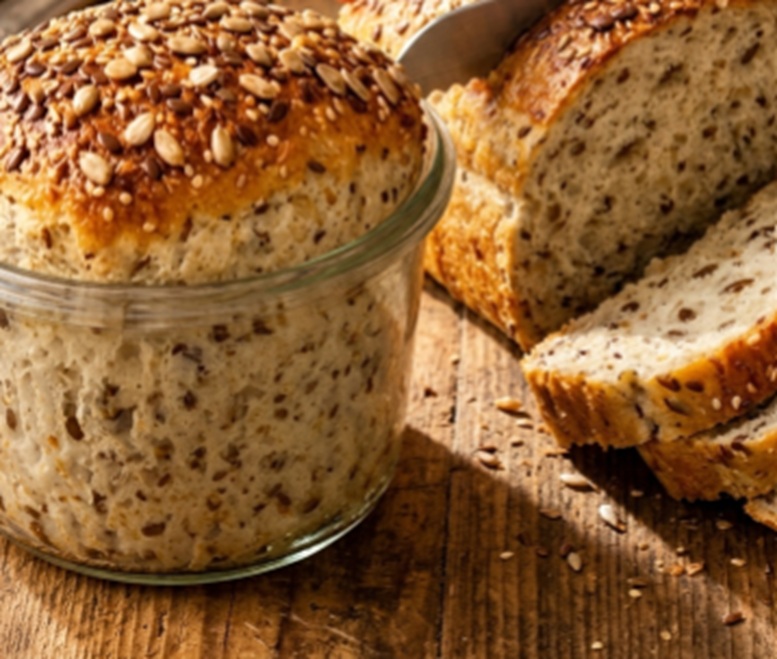
There’s something slightly absurd about making bread in a jar. The first time I saw it, I assumed it was a gimmick — one of those things that looks good in a video and fails in a real kitchen. But I tried it anyway, mostly out of curiosity, and the result was a dense, seedy, genuinely satisfying loaf that required almost no effort and almost no equipment.
It’s not fancy bread. That’s exactly why it works.
No-knead jar bread sits in a particular category — somewhere between proper artisan baking and “I just wanted bread and didn’t want to think too hard.” The jar acts as both mixing vessel and proofing container, which means fewer dishes, less fuss, and a process that’s hard to mess up badly enough to ruin.
Ingredients:
You need 300g of bread flour — or all-purpose, though bread flour gives better structure. About 240ml of lukewarm water. Half a teaspoon of instant yeast. Three-quarters of a teaspoon of salt. Then the seeds: a mix works best. Sunflower, sesame, flax, pumpkin — maybe two to three tablespoons total. Some people add a small spoon of honey to help the yeast along, though in my experience it’s not strictly necessary.
The seed mix is where you can actually make this your own
Whatever combination you use, toast the seeds lightly beforehand if you have time. It deepens the flavor noticeably. But that’s not always the case with every seed — flax, for instance, doesn’t change much with toasting, and it’s fine to skip that step if you’re short on time or patience.
Instructions:
Combine flour, yeast, salt, and seeds directly in a large jar — at least a one-liter jar, ideally bigger. Stir them together dry first, then add the water. Mix with a long spoon or spatula until no dry flour remains. The dough will look rough and shaggy. That’s correct. Cover the jar loosely — not airtight — and leave it at room temperature for somewhere between eight and twelve hours, or overnight.
The overnight rise is doing all the work you’re not doing
By morning, the dough will have roughly doubled, smelling yeasty and slightly tangy, with bubbles visible through the glass. Flour a surface lightly, tip the dough out, and fold it a few times — not kneading, just folding it onto itself. Shape it loosely into a round or oval. Let it rest another thirty to forty-five minutes while your oven heats up, ideally with a Dutch oven or heavy lidded pot inside.
Bake covered at around 230°C for twenty minutes, then uncovered for another fifteen to twenty until the crust is deeply golden. The seeds on the surface will smell toasted and slightly nutty. Let it cool — at least thirty minutes — before cutting.
Hints for Success:
The water temperature matters more than most recipes admit. Too hot and it kills the yeast before it starts. Too cold and the dough barely rises in the given time. Lukewarm means it should feel comfortable on your wrist — not warm, not cool. That tends to be somewhere around 35–38°C if you want to measure it.
Don’t rush the cooling, even though you’ll want to
Cutting into hot bread collapses the crumb. The interior is still setting as it cools, and slicing too early leaves a gummy, dense center — which is disappointing after you’ve waited all night. Also: if the top crust starts browning too fast in the final uncovered stage, a loose piece of foil slows it down without steaming the crust.
Health Benefits:
The seeds aren’t just texture. Flaxseeds bring omega-3 fatty acids and fiber. Sunflower seeds add vitamin E and magnesium. Sesame contributes calcium and healthy fats in small but real amounts. Together they shift this from a basic bread into something with actual nutritional depth, which is easy to forget when you’re just eating a slice with butter.
Slow fermentation changes what the bread does to your digestion
The long overnight rise isn’t only about flavor. Extended fermentation partially breaks down phytic acid in the flour, which can otherwise interfere with mineral absorption. It also makes the bread more digestible for some people who find standard yeasted bread difficult. This is a variable thing — not universal — but it’s one reason long-fermented breads have gathered attention beyond just taste.
Nutritional Information (Per slice, approx. 1 of 10):
Calories: ~130–150 kcal
Protein: ~4–5g
Carbohydrates: ~22–24g
Fat: ~3–5g
Fiber: ~2–3g
Iron: ~8–10% daily value
Magnesium: ~6–8% daily value
Variations and Substitutions:
Replacing up to a third of the bread flour with whole wheat flour adds a slightly earthier flavor and more fiber, though the loaf becomes denser. Rye flour works similarly — even a small amount, maybe 50g, changes the flavor profile noticeably toward something more complex and slightly sour.
Herbs work better here than most people expect
Dried rosemary or thyme added to the dry ingredients gives the bread an almost focaccia-adjacent quality. Za’atar works surprisingly well too. The seeds are already adding texture and flavor, so adding herbs on top of that sounds like too much — but it’s not, usually.
FAQs:
What size jar do I need? At minimum one liter, but 1.5 liters is more comfortable — the dough needs room to rise without touching the lid.
Can I use active dry yeast instead of instant? Yes, but activate it first in the lukewarm water with a pinch of sugar for about ten minutes before mixing with the flour.
What if my dough barely rose overnight? The kitchen was probably too cold, or the yeast was old. Give it more time somewhere warmer — near an oven or in a slightly warm oven that’s been turned off.
Does it keep well? Two to three days at room temperature wrapped in a cloth. After that, slice and freeze.
Conclusion:
Seeded no-knead jar bread is not the best bread you’ll ever make. That’s probably not the goal anyway. What it is — reliable, low-effort, genuinely good, requiring only a jar and a willingness to plan slightly ahead — makes it worth keeping in regular rotation. Some mornings you cut into it and feel quietly pleased with yourself. Most mornings, you just eat it. Both outcomes are fine.