Introduction:
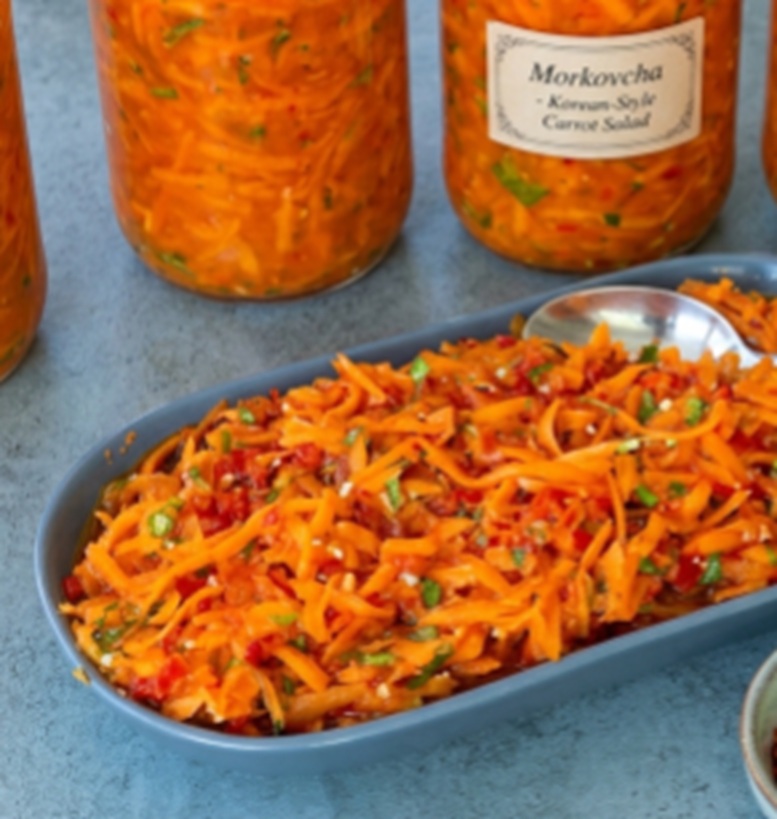
Morkovcha is one of those things that doesn’t quite fit neatly into one culinary identity. It’s technically a Soviet-era Korean dish — or a Korean dish shaped by Soviet circumstances, depending on how you look at it. Koreans who were forcibly relocated to Central Asia in the late 1930s adapted what they had. Carrots were available. Coriander seed was findable. And somehow, something remarkable came out of that.
It’s not fusion. It’s survival food that became beloved.
I first had this at a market stall somewhere between a pickle vendor and a dried fruit stand — it was bright orange, glistening, sharp-smelling. I bought a small bag and ate it standing up. That was enough.
Ingredients: What You Actually Need
The carrot is the whole point, so don’t use sad, soft ones from the back of the fridge. You want firm, fresh carrots — about 500 grams. A mandoline or the coarse side of a box grater works, though in my experience, julienning by hand gives slightly better texture if you have the patience.
The spice situation is more flexible than recipes suggest
You’ll need: garlic (4–5 cloves, crushed rather than minced), ground coriander (about a teaspoon, maybe more), a pinch of chili flakes, salt, sugar, white vinegar or apple cider vinegar, and neutral oil — sunflower is traditional, but any light oil does the job. Some people add a touch of ground black pepper. Some don’t. Both versions taste right.
Instructions:
Grate your carrots into long thin strips and put them in a large bowl. Sprinkle salt generously — maybe three-quarters of a teaspoon — and a small pinch of sugar. Toss, then leave it. Ten minutes, maybe fifteen. The carrots will release liquid and soften just slightly at the edges while keeping some bite.
The hot oil step — this is where it gets interesting
Meanwhile, heat your oil in a small pan until it’s genuinely hot. Not warm. Hot. Crush the garlic into the carrot bowl, add your coriander and chili, then pour the hot oil directly over everything. It sizzles. It blooms the spices immediately and mellows the raw garlic in a way that cold oil simply doesn’t. Add vinegar — roughly a tablespoon — toss everything together, taste it. Adjust. Then cover and refrigerate for at least an hour. Overnight is better. The flavors shift considerably as it rests.
Hints for Success: Small Things That Matter More Than Expected
Don’t skip the resting time. It’s tempting to eat it right away — the smell is aggressive and good — but the salad at two hours is a completely different dish than the salad at twenty minutes. The vinegar softens, the garlic rounds out, the coriander deepens.
Texture is easy to ruin quietly
The other thing: don’t over-salt during the initial step. This tends to happen, especially if you’re used to cooking with heavier hands. The carrots will shrink and concentrate as they sit. Too much salt early means no recovery later. Start conservatively, taste after resting, adjust then.
Also — and this is a minor thing — the oil temperature matters more than people think. Lukewarm oil gives you a greasy salad. Properly hot oil gives you something that smells toasted, aromatic, almost nutty.
Health Benefits: What’s Actually in This Thing
Carrots bring beta-carotene in meaningful quantities, which the body converts to vitamin A. The fat from the oil, interestingly, helps absorb it — fat-soluble vitamins need fat to work. So the oil isn’t just flavor here, it’s doing something functional.
Coriander seed is underrated
Ground coriander has mild anti-inflammatory properties and has been used in traditional medicine across Central Asian and Middle Eastern contexts for a long time. Whether that translates meaningfully in a tablespoon of salad is debatable, but it’s not nothing. Garlic contributes its usual allicin-based benefits, and vinegar may support blood sugar modulation — though the amounts here are small.
Nutritional Information (Per serving, approx. 100g):
Calories: ~90–110 kcal
Carbohydrates: ~10g
Fat: ~5–6g (mostly unsaturated)
Protein: ~1g
Vitamin A: ~80–100% of daily value
Sodium: varies with salting
Variations and Substitutions: Where You Can Go Off-Script
Some people add thinly sliced onion, marinated briefly in vinegar before mixing in. It adds sharpness. Others include a small amount of sesame oil alongside the neutral oil — this pulls the flavor slightly eastward, more visibly Korean in character.
If you can’t find ground coriander, whole seeds toasted and crushed work better anyway. The freshness is noticeable. Chili flakes can be replaced with gochugaru for a different heat profile — less sharp, more rounded and slightly fruity.
FAQs: Questions That Come Up Honestly
Does it keep well? Yes — three to four days refrigerated, sometimes five. The texture continues to change but doesn’t deteriorate badly.
Can I use pre-shredded carrots? You can. It won’t be quite the same. Pre-shredded tends to be drier and the pieces are often too short for that characteristic long-strand texture.
Is it supposed to be that garlicky? Probably, yes. It mellows with time. If raw garlic is genuinely a problem, you can briefly sauté the garlic in the oil before pouring.
Conclusion: Where This Sits in a Meal
Morkovcha works alongside grilled meats, as part of a spread of cold dishes, or honestly on its own with bread. It’s the kind of thing people eat a little of and then keep returning to during a meal without quite meaning to. Something about the acidity and the spice — it resets the palate, or at least that’s how it often feels. Whether it belongs to Korean cuisine, Soviet cuisine, or something else entirely is a conversation that probably doesn’t need resolving over a bowl of carrots.