Introduction
Okay, real talk — have you ever had one of those food moments where something hits the table and you’re like “oh yeah, I completely forgot about this and I’ve been missing out”? That’s gizzards for me, every single time.
They’re chewy, rich, and yeah — a little funky. In a good way, I promise. You either grew up eating them or you didn’t, and if you didn’t, well… we need to fix that.
Full confession: I went through a whole phase of avoiding them. I thought I’d graduated to “fancier” food or something. Spoiler alert — I was wrong and slightly embarrassing. Gizzards are the real deal. They just need a little time and a little love, and honestly? Don’t we all.
They’re not Instagram-worthy. Nobody’s styling them next to fresh flowers and a linen tablecloth. But that’s exactly why they’re great.
Ingredients
Just Grab These — You Probably Have Most of Them
500g chicken gizzards, cleaned and trimmed
3 garlic cloves, give ’em a good smash
1 medium onion, sliced thick
2 tablespoons vegetable oil (lard if you’re feeling old-school)
1 teaspoon smoked paprika
½ teaspoon cumin
Salt and black pepper — don’t be shy
1 bay leaf
A splash of apple cider vinegar (okay maybe two splashes, live a little)
Water or chicken stock, enough to cover everything
Fresh parsley or cilantro — optional, but it makes things look like you tried
Feeling spicy? Throw in some chili flakes. No cumin in the cupboard? Honestly, skip it, it’ll still be great. This recipe doesn’t need you to stress.
Instructions
The Bit Everyone Always Rushes (Please Don’t)
First things first — rinse those gizzards even if the pack says they’re pre-cleaned. Then pat them completely dry. I know, I know, it seems fussy. But wet gizzards steam instead of sear and you’ll end up with sad, grey little things instead of something delicious. Trust me on this one.
Get your pan hot — cast iron if you’ve got it, anything heavy if you don’t. Season the gizzards with salt, pepper, and paprika, then lay them in without crowding the pan. Now here’s the hard part: just leave them alone for two whole minutes. No poking, no shuffling. You want actual brown color, not that depressing grey.
Once they’re looking properly golden, pull them out and set them aside. Same pan, same heat — drop in your onion and garlic. While those soften, scrape up all the little stuck bits from the bottom. That’s basically concentrated flavor and you absolutely want it in your dish.
Gizzards go back in. Add cumin, bay leaf, vinegar, and enough stock to just cover them. Bring it to a gentle simmer — not a wild boil, just a friendly bubble. Lid on, heat low, and now comes the hardest part: waiting. We’re talking 45 minutes to an hour minimum. Gizzards are pure muscle and they will not be rushed. They’ll fight you. Let them relax.
Check at 45 minutes. Should be tender but with a little bite. Still rubbery? Another 15 minutes. Once done, taste the liquid, fix the salt, maybe reduce it a little if it needs more punch. Serve over rice, with bread, or straight from the pan standing at your stove. No judgment.
Hints for Success
Lessons Learned the Hard Way So You Don’t Have To
Dry the gizzards. Yes I already said this. I’m saying it again because people skip it constantly and then wonder why things went wrong.
Keep the heat low during braising. Every time I’ve tried to speed this up, I’ve regretted it. High heat turns them weirdly bouncy and chewy in the bad way — like eating a rubber band but sadder.
Don’t skip the vinegar just because it sounds weird. It basically disappears during cooking but does something magical to the texture that you can’t quite explain. It’s one of those things where you’d only notice if it was missing.
Cooking for gizzard skeptics? Slice them up after cooking. Smaller pieces look less intimidating and honestly just look more like regular meat. You can ease people in gently.
And please, please save the braising liquid. It’s liquid gold. Toss it in a soup, cook rice in it, literally anything.
Health Benefits
Turns Out These Little Things Are Actually Good for You
Here’s the part where gizzards go from “budget ingredient” to genuinely impressive. They’re packed with protein — we’re talking 18 to 20 grams per serving. Not “okay for the price” protein. Actually good protein.
They’ve also got iron, zinc, and a solid hit of B vitamins, especially B12. That’s the one people only think about when they realize they’ve been deficient for months and suddenly everything makes sense. Organ meats just quietly deliver nutrients that regular cuts can’t really match.
And they’re cheap. Like, genuinely cheap. So you’re getting top-tier nutrition without the top-tier grocery bill. That’s a win any way you look at it.
Nutritional Information (Per Serving — About 150g Cooked)
NutrientApproximate AmountCalories150–180 kcalProtein18–22gFat4–6gCarbohydrates1–2gIron~30% Daily ValueZinc~20% Daily ValueVitamin B12~35% Daily Value
These numbers shift a bit depending on how heavy-handed you are with the oil, but you get the idea. It’s a rough guide, not a lab report.
Variations and Substitutions
Ways to Mix It Up Without Messing It Up
The spice situation is super flexible. Ditch the paprika, load up on black pepper. Add a cinnamon stick if you want something more warming and stew-like. West African-style with tomatoes and scotch bonnet is absolutely incredible if you can handle the heat — highly recommend.
Duck or turkey gizzards work the same way here. Duck ones especially are richer and fattier and honestly feel like a bit of a treat. Worth asking your butcher about.
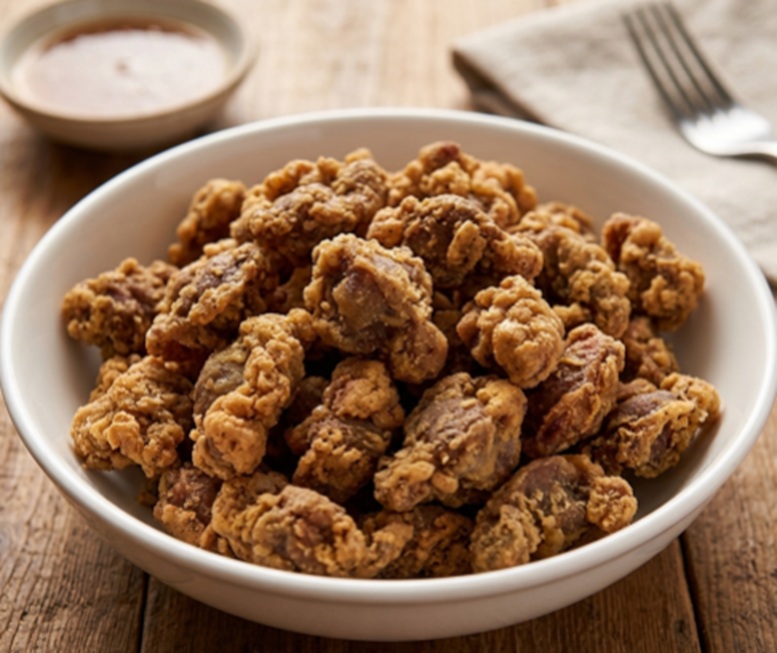
Want crispy gizzards instead? You can totally do that. Boil them first for about 40 minutes, then dredge in seasoned flour and fry until golden. It’s an extra step but the result is completely different — think bar snack energy. Very good energy.
Out of apple cider vinegar? White wine vinegar does the job. A smaller amount of plain white vinegar works too.
FAQs
The Questions You Were Wondering But Didn’t Want to Ask
Will my kitchen smell weird? A little, yeah. It’s distinctive. Not bad once you’re used to it, but the first time might catch you off guard. Open a window, you’ll be fine.
Can I use a pressure cooker? Absolutely — cuts the time down to about 25 minutes. The texture’s slightly different but still totally good. Great option for weeknights.
How do I know if they’re cleaned properly? Check for any yellowish membrane or dark patches — that stuff is bitter and should be gone. A decent butcher will have handled it, but always worth a quick look.
Are they actually safe to eat? Yes! Cook them through like any poultry — internal temp of 74°C (165°F). The long braise takes care of this easily, so don’t stress.
Conclusion
Look, gizzards aren’t a quick weeknight cop-out. They need time, they need attention, and they need you to actually follow the steps instead of improvising halfway through. But once you’ve nailed it once, this recipe just kind of lives in your back pocket permanently.
Cheap, filling, nutritious, and way more interesting than another chicken breast. Give them one proper shot — you might surprise yourself.